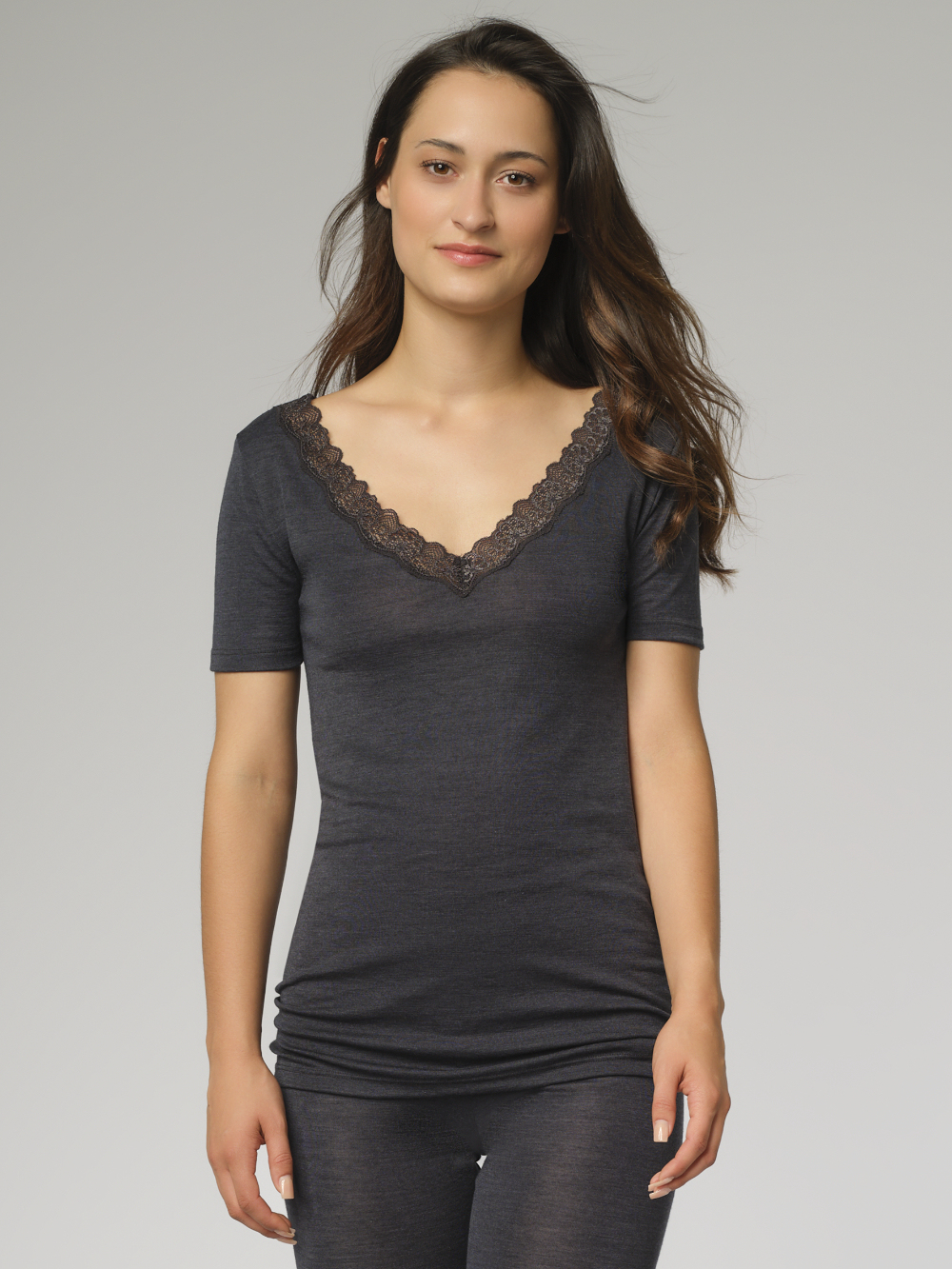
The truth about merino wool
What is the first thing that comes to mind when you hear the word “wool”? We immediately think of a warm, soft and cozy feeling on the skin.
Are you wondering what makes wool so special? Find out what it can really do, how it is produced and what the hype surrounding merino wool is all about.
We not only highlight its advantages, but also take a closer look at its downsides – especially when it comes to merino wool.
By Pia Erichsen
September 28, 2023
How wool becomes yarn
After shearing, the wool is sorted by color and quality and then washed.
In the cleaned fleece, the fibers are initially disordered, so they are loosened and combed. At this stage, the wool can also be dyed.
In the next step, the fibers are spun into yarn. A uniform thread is created by drawing and twisting the short fibers together.
Finally, the yarn is wound into a ball or a skein.

Positive
- It warms when it is cold It
- Cools when it is warm
- It is dirt-repellent
- It is particularly lightweight with high thermal performance
- It is resistant to unpleasant odours
- It has natural UV protection
- It is breathable
- It absorbs moisture
- It is elastic
- It does not crease
- It does not become electrostatically charged
- It is flame retardant
Negative
- It can shrink easily when washed
- It can be scratchy on sensitive skin
- Pilling and fluffing may occur
- It is susceptible to moths
- It has a low tear resistance
The popular sheep's wool
Until the 19th century, wool was a precious material worn mainly by privileged and wealthy people. With imports from Australia and New Zealand, it became widely available and more affordable.
The shorn coat of sheep is called fleece and consists of two layers: an outer layer that is coarse and protective, and an inner layer that is soft and helps regulate body temperature.
Typically, sheep's wool is obtained from the finer inner fibers. The characteristic softness is created by the scaly structure and natural crimp of the fibers, which varies depending on the breed.
In Germany, sheep are usually shorn once a year. On average, each sheep produces around 3.5 kg of wool, although this varies depending on breed and age.


Why merino wool is not itchy
Merino sheep belong to the fine wool breed. Their fibers are particularly fine, soft and highly crimped.
Merino wool fibers are about half as thick as conventional wool fibers and much finer than human hair. The finer the fibers, the more they bend when they come into contact with the skin.
Merino fibers can change direction up to 40 times per centimeter. This reduces skin irritation and prevents the typical itchy feeling.
Fibers thicker than 25 micrometers are usually perceived as itchy. Merino wool typically ranges between 16.5 and 24 micrometers, while human hair has a diameter of around 30 to 80 micrometers.
What you should look out for when buying merino wool
At first glance, merino wool seems to offer only advantages – but is that really the case? With all these benefits, one important question often fades into the background: where does this “miracle wool” actually come from?
Have you heard of the term “mulesing”? If not, read on – we shed light on the issue.
The big problem of mulesing
What many people don’t realize is that the production of merino wool is often associated with significant animal suffering. Merino sheep are bred to have many skin folds in order to increase wool yield.
This makes them vulnerable to flystrike. Flies lay their eggs in warm, moist skin folds, and the hatched larvae can cause severe infections – often fatal.
To prevent this, skin folds are sometimes removed from lambs without anesthesia. The wounds heal into scar tissue where no wool grows, reducing the risk of infestation.
Mulesing-free production
At Comazo, we strongly oppose this practice and rely on 100% mulesing-free products.
What to look for when buying merino wool
- Ask whether mulesing is used in production
- Avoid products without transparent sourcing information
- Demand transparency from brands
- Support initiatives and campaigns against mulesing